¶ Thrift简介
Apache Thrift 软件框架是开源的跨语言RPC框架,用于可扩展的跨语言服务开发,它将软件堆栈与代码生成引擎相结合,通过中间语言(IDL, 接口定义语言)来定义RPC的接口和数据类型,然后通过一个编译器生成不同语言的代码(C++、Java、Python、PHP、Ruby、Erlang、Perl、Haskell、C#、Cocoa、JavaScript、Node.js、Smalltalk、OCaml 和 Delphi)。
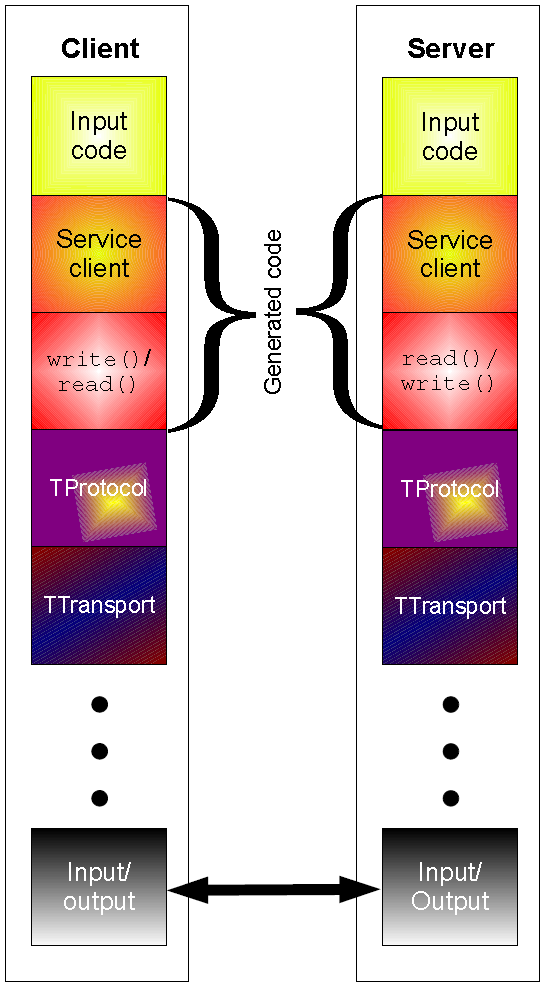
Thrift实际上是实现了C/S模式(客户端/服务器模式),通过代码生成工具将接口定义文件生成服务器端和客户端代码(可以为不同语言),从而实现服务端和客户端跨语言的支持。用户在Thirft描述文件中声明自己的服务,这些服务经过编译后会生成相应语言的代码文件,然后用户实现服务(客户端调用服务,服务器端提服务)便可以了。其中protocol(协议层, 定义数据传输格式,可以为二进制或者XML等)和transport(传输层,定义数据传输方式,可以为TCP/IP传输,内存共享或者文件共享等)被用作运行时库。
¶ Thrift实战
¶ 1 安装
# 使用brew安装thrift
brew install thrift
# 同时安装相关依赖
brew install boost
brew install openssl
brew install libevent
# 最后查看是否成功
thrift -version
¶ 2 编写thrift接口定义文件
# test.thrift
service  HelloWorldService {
  string sayHello(1:string username)
}
这就定义好了一个名字为 HelloWorldService 的服务,后续客户端和服务端代码都是围绕这个HelloWorldService来写的
¶ 3 根据IDL生成对应的源文件
thrift --gen <language> <Thrift filename>
以下为HelloWorldService.java的部分代码,主要是Iface和client
 public interface Iface {

    public String sayHello(String username) throws org.apache.thrift.TException;

  }

  public static class Client extends org.apache.thrift.TServiceClient implements Iface {
    public static class Factory implements org.apache.thrift.TServiceClientFactory<Client> {
      public Factory() {}
      public Client getClient(org.apache.thrift.protocol.TProtocol prot) {
        return new Client(prot);
      }
      public Client getClient(org.apache.thrift.protocol.TProtocol iprot, org.apache.thrift.protocol.TProtocol oprot) {
        return new Client(iprot, oprot);
      }
    }

    public Client(org.apache.thrift.protocol.TProtocol prot)
    {
      super(prot, prot);
    }

    public Client(org.apache.thrift.protocol.TProtocol iprot, org.apache.thrift.protocol.TProtocol oprot) {
      super(iprot, oprot);
    }

    public String sayHello(String username) throws org.apache.thrift.TException
    {
      send_sayHello(username);
      return recv_sayHello();
    }

    public void send_sayHello(String username) throws org.apache.thrift.TException
    {
      sayHello_args args = new sayHello_args();
      args.setUsername(username);
      sendBase("sayHello", args);
    }

    public String recv_sayHello() throws org.apache.thrift.TException
    {
      sayHello_result result = new sayHello_result();
      receiveBase(result, "sayHello");
      if (result.isSetSuccess()) {
        return result.success;
      }
      throw new org.apache.thrift.TApplicationException(org.apache.thrift.TApplicationException.MISSING_RESULT, "sayHello failed: unknown result");
    }

  }
Iface是个接口文件,主要是用来被服务器端的程序继承和重写的,Iface里面定义了方法的接口,在服务器端的程序中应当实现这个接口,而client程序中定义了sayHello 方法,而sayHello 方法中又调用了send_sayHello和 recv_hello 用来发送请求和接受反馈,具体通信的细节不用用户去考虑,thrift已经帮我们完全生成好了,只需要我们具体实现sayhello的方法
¶ 4 实现接口
package common;

public class HelloWorldImpl implements  HelloWorldService.Iface {
    public  HelloWorldImpl(){
    }
    @Override
    public  String sayHello(String username){
        return "hi " + username +"welcome to thrift world";
    }
}
¶ 5 客户端代码
package client;

import common.HelloWorldService;
import org.apache.hadoop.yarn.webapp.example.HelloWorld;
import org.apache.thrift.TException;
import org.apache.thrift.protocol.TBinaryProtocol;
import org.apache.thrift.protocol.TProtocol;
import org.apache.thrift.transport.TSocket;
import org.apache.thrift.transport.TTransport;
import org.apache.thrift.transport.TTransportException;


public class HelloClientDemo {

    public static final String SERVER_IP = "localhost";
    public static final int SERVER_PORT = 8090;
    public static final int TIMEOUT = 30000;

    /**
     *
     * @param userName
     */
    public void startClient(String userName) {
        TTransport transport = null;
        try {
            transport = new TSocket(SERVER_IP, SERVER_PORT, TIMEOUT);
            // 协议要和服务端一致
            TProtocol protocol = new TBinaryProtocol(transport);

            HelloWorldService.Client client = new HelloWorldService.Client(protocol);
            transport.open();
            String result = client.sayHello(userName);
            System.out.println("Thrify client result =: " + result);
        } catch (TTransportException e) {
            e.printStackTrace();
        } catch (TException e) {
            e.printStackTrace();
        } finally {
            if (null != transport) {
                transport.close();
            }
        }
    }

    /**
     * @param args
     */
    public static void main(String[] args) {
        HelloClientDemo client = new HelloClientDemo();
        client.startClient("china");

    }

}
¶ 6 服务端代码
package server;


import common.HelloWorldImpl;
import common.HelloWorldService;
import org.apache.thrift.TProcessor;
import org.apache.thrift.protocol.TBinaryProtocol;
import org.apache.thrift.server.TServer;
import org.apache.thrift.server.TSimpleServer;
import org.apache.thrift.transport.TServerSocket;

public class HelloServerDemo {
    public  static  final int  SERVER_PORT = 8090;
    public void startServer() {
        try {
            System.out.println("HelloWorld TSimpleServer start ....");

            //在这里调用了 HelloWorldImpl 规定了接受的方法和返回的参数
            TProcessor tprocessor = new HelloWorldService.Processor<HelloWorldService.Iface>( new HelloWorldImpl());

            TServerSocket serverTransport = new TServerSocket(SERVER_PORT);
            TServer.Args tArgs = new TServer.Args(serverTransport);
            tArgs.processor(tprocessor);
            tArgs.protocolFactory(new TBinaryProtocol.Factory());

            TServer server = new TSimpleServer(tArgs);
            server.serve();

        } catch (Exception e) {
            System.out.println("Server start error!!!");
            e.printStackTrace();
        }
    }

    /**
     * @param args
     */
    public static void main(String[] args) {
        HelloServerDemo server = new HelloServerDemo();
        server.startServer();
    }

}